
Fraser Island 4x4 Adventures in 2026: A Strategic Guide for Business Leaders and Investors
Introduction: Why a Remote Sand Island Matters to a Global Business Audience
In 2026, as business leaders, investors, and founders navigate a world defined by artificial intelligence, digital finance, and rapidly evolving global markets, it may seem counterintuitive that a remote sand island off the coast of Queensland has strategic relevance. Yet Fraser Island-known officially as K'gari-offers a compelling case study in how tourism, sustainability, infrastructure, and technology intersect in ways that matter to decision-makers from New York to London, Frankfurt, Singapore, and Sydney. For readers of digipdemo.com, who track developments across AI, finance, economics, employment, crypto, and sustainable business, Fraser Island's 4x4 driving experiences highlight how physical-world assets can be managed, monetized, and preserved in a digital-first economy.
The island is more than a destination for adventurous drivers; it is a world heritage site, a living ecosystem, and a micro-economy that demonstrates how responsible tourism, data-driven planning, and environmental stewardship can coexist with profitable enterprise. As global investors increasingly price climate risk, regulatory scrutiny, and sustainability metrics into their models, understanding places like Fraser Island becomes part of a broader toolkit for assessing long-term value and resilience. For a platform such as digipdemo.com, which is focused on translating complex global trends into actionable insights, this story resonates with a worldwide audience interested in how nature, technology, and markets converge. Learn more about sustainable business practices and their impact on long-term value creation on the main digipdemo.com site.
Fraser Island in Context: Natural Capital and Economic Value
Fraser Island stretches for over 120 kilometers along the Queensland coast, just north of Noosa and the Sunshine Coast, and is recognized as the largest sand island in the world. Its status as a UNESCO World Heritage site underscores its environmental significance, but from a business and economics perspective, it also serves as a prime example of natural capital: an asset with intrinsic ecological value that generates recurring economic returns through tourism, services, and employment.
The island's appeal to 4x4 driving enthusiasts is built on a unique combination of open beaches and technical inland tracks, all formed from sand and stabilized over time by dense vegetation and extensive root systems. Historically, these tracks were carved out by logging operations that once extracted timber from the island's forests, demonstrating a shift from extractive industry to experience-based, service-oriented tourism. That transition mirrors broader global trends in advanced economies, where value creation is increasingly tied to experiences, data, and digital platforms rather than purely physical goods.
For investors and founders, Fraser Island showcases how a single geographic asset can support a layered ecosystem of businesses: vehicle rental firms, tour operators, hospitality providers, logistics and fuel suppliers, maintenance services, and digital platforms that aggregate and market experiences. As AI and data analytics continue to reshape how tourism and mobility are priced, optimized, and personalized, platforms like digipdemo.com become critical intermediaries, helping global audiences interpret how such markets evolve and where new investment opportunities may emerge. Visitors interested in the platform's background and expertise can explore the About section on digipdemo.com.
The 4x4 Experience: Infrastructure, Risk, and Operational Complexity
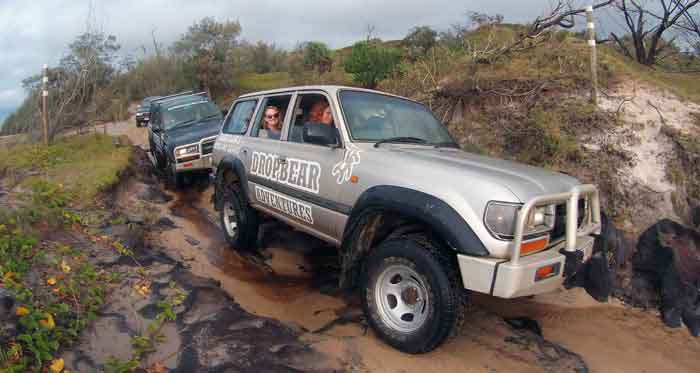
The core attraction for many visitors is the driving itself. Fraser Island's inland tracks, originally built by logging companies, wind through dense native vegetation and over exposed tree roots, creating a network of narrow, technical routes that test both driver skill and vehicle capability. The sand is held in place by the roots, but that stabilization comes at the cost of a constant, jarring ride, with deep ruts, tight corners, and frequent changes in elevation. From an operational perspective, this environment is a case study in how infrastructure, weather, and human behavior interact to create both value and risk.
Heavy storms, frequently driven by the island's exposure to the Pacific Ocean, reshape the tracks with large potholes, deep puddles, and soft sand drifts. In drier periods, the primary hazard shifts from water damage to vehicles becoming bogged down in loose sand, particularly in areas where traffic is concentrated. For businesses operating tours or rental fleets, this variability necessitates robust risk management, vehicle maintenance regimes, and real-time decision-making about which routes are safe, accessible, and commercially viable.
On the eastern side of the island runs 75 Mile Beach, effectively functioning as the main highway from north to south. During low tide, it becomes a broad, relatively smooth driving surface that allows for higher speeds and straightforward navigation, but the conditions change daily, influenced by tides, wind, and swell. Hazards such as washouts, incoming waves, and shifting dunes require constant vigilance, especially for less experienced drivers. From a data and AI perspective, this is an environment where predictive models, computer vision, and real-time sensor data could significantly reduce risk, optimize routing, and support insurance underwriting-an area of increasing interest to fintech innovators and insurtech startups.
Along the beach, small hubs provide fuel, food, and accommodation, forming a linear supply chain that depends on stable visitor flows, reliable logistics, and careful inventory management. For entrepreneurs and investors, the island's tourism economy illustrates how even remote, physically constrained locations can benefit from digital tools that forecast demand, manage bookings, and integrate payment systems, including emerging digital asset solutions in markets receptive to crypto-based travel products. To explore how digital features and tools can enhance such experiences, readers can review the capabilities highlighted at digipdemo.com/features.html.
Safety, Regulation, and Trust: Lessons for Global Markets
Despite its beauty and infrastructure, Fraser Island has experienced several fatal accidents over the years, often linked to reckless driving, inadequate preparation, or a failure to respect local conditions. This reality underscores a central theme that resonates across global markets: sustainable growth depends on trust, regulation, and responsible behavior. Just as financial markets require robust compliance frameworks and transparent governance, high-risk tourism environments demand clear rules, enforcement, and education.
Visitors are expected to familiarize themselves with local driving regulations, speed limits, and safety protocols before taking to the sand, whether they arrive with their own vehicle via ferry from Rainbow Beach or Hervey Bay, or join a guided convoy led by an experienced driver. For operators, this means investing in training, safety briefings, and contingency planning, as well as maintaining communication channels for emergencies. The island's authorities and businesses must coordinate to ensure that infrastructure, signage, and rescue services are adequate for the volume and profile of visitors.
This emphasis on structured risk management parallels developments in sectors such as digital assets, AI-driven finance, and algorithmic trading, where innovation must be balanced with safeguards to protect participants and preserve market integrity. For a business-oriented audience, the island's safety record serves as a reminder that high-reward environments, whether physical or digital, require systems that build and maintain trust. Those seeking to engage further with a trusted, expertise-driven digital platform can use the contact options provided on digipdemo.com/contactus.html.
Guided Experiences and Skill Development: Human Capital in a Digital Age
A notable aspect of Fraser Island's 4x4 ecosystem is the range of packages tailored to different experience levels. Many visitors opt for guided tours that allow them to drive under supervision, joining a convoy led by a seasoned driver familiar with tides, weather patterns, and track conditions. These structured experiences serve a dual purpose: they reduce risk and they accelerate skill development, enabling participants to improve their off-road driving capabilities in a controlled yet challenging environment.
From a human capital perspective, this model mirrors the way organizations invest in training employees to navigate complex technological and financial systems. As AI automates routine tasks and reshapes employment patterns, the ability to acquire specialized, experience-based skills becomes increasingly valuable. Off-road driving on Fraser Island is, in its own way, a metaphor for operating in volatile markets: conditions change rapidly, past data has limited predictive power, and success requires a blend of technical knowledge, situational awareness, and disciplined decision-making.
The presence of multiple campsites, lodges, and service providers creates a micro-labor market that supports local employment and seasonal work, with roles ranging from guides and mechanics to hospitality staff and logistics coordinators. For investors examining regional economies in Australia, Canada, or the Nordic countries, such tourism clusters offer insight into how smaller communities can build resilience by combining environmental assets with targeted skills and service offerings. Readers can explore curated external and internal resources related to such themes via the links hub at digipdemo.com/links.html.
Sustainability, Climate Risk, and Long-Term Investment
Fraser Island's continued viability as a tourism destination depends heavily on environmental stewardship and adaptation to climate-related risks. Rising sea levels, changing storm patterns, and shifting ecosystems could, over time, alter the very beaches and inland tracks that attract visitors today. For global investors and policymakers, the island is a microcosm of the broader climate challenge: the need to balance immediate economic gains with the preservation of long-term asset value.
The island's world heritage status brings additional layers of scrutiny and regulatory oversight, constraining certain types of development while encouraging others that align with conservation goals. This creates a framework within which businesses must innovate responsibly, adopting practices that reduce environmental impact, such as limiting vehicle numbers in sensitive areas, investing in low-emission transport options, and supporting conservation projects. In financial terms, these measures can be viewed as investments in risk mitigation and brand equity, particularly as consumers in markets such as the United States, United Kingdom, Germany, and Scandinavia increasingly favor organizations that demonstrate credible sustainability commitments.
For a platform like digipdemo.com, which serves a globally dispersed audience interested in sustainable tech, green finance, and ESG-focused investment strategies, Fraser Island offers a tangible example of how environmental constraints and regulatory frameworks shape business models. Learn more about sustainable business practices and their implications for long-term portfolio construction by exploring the broader content available on digipdemo.com.
Technology, Data, and the Future of Adventure Tourism
As of 2026, the integration of technology into adventure tourism is accelerating. On Fraser Island, this is beginning to manifest through digital booking platforms, GPS-based navigation aids, real-time tide and weather applications, and social media-driven marketing that targets specific demographic segments in North America, Europe, and Asia. Over the coming years, more sophisticated tools are likely to emerge, including AI-powered route recommendations, predictive maintenance systems for rental fleets, and dynamic pricing models that adjust to demand, risk levels, and environmental constraints.
For founders and investors working at the intersection of AI, mobility, and travel, the island represents an ideal testbed for solutions that can later be scaled to other regions, from the deserts of the United States to the mountainous terrains of Europe and the forests of Scandinavia. Integrating Internet of Things sensors into vehicles and infrastructure could generate valuable datasets on driving behavior, track conditions, and incident patterns, which in turn could inform insurance products, safety standards, and regulatory policy.
At the same time, the tourism sector must navigate privacy concerns, data governance requirements, and the ethical implications of algorithmic decision-making, especially when safety is at stake. For example, an AI system that recommends driving routes based purely on speed and convenience, without adequately weighting risk under changing weather conditions, could expose operators and visitors to unnecessary danger. This tension between optimization and responsibility mirrors debates occurring in financial markets, where high-frequency trading algorithms and AI-driven investment strategies are scrutinized for their systemic impact.
The digital transformation of adventure tourism also opens opportunities for new employment models, including remote work for marketing, data analysis, and customer support roles, supporting global talent markets that extend far beyond Queensland. Such developments align with broader employment trends tracked by digipdemo.com, offering readers insight into how technology reshapes work in both urban centers and remote destinations.
Cultural Heritage, Indigenous Perspectives, and Social Responsibility
Beyond its environmental and economic significance, Fraser Island carries deep cultural meaning, particularly for the Indigenous communities whose histories and traditions are intertwined with the land. The recognition of the island's traditional name, K'gari, reflects a broader shift across Australia and other regions such as Canada, New Zealand, and Scandinavia toward acknowledging and integrating Indigenous perspectives into land management and tourism narratives.
For businesses operating on or around the island, this cultural dimension introduces additional responsibilities and opportunities. Collaborations with Indigenous groups can support more authentic, educational tourism products that highlight stories, language, and practices that might otherwise be marginalized. Such initiatives can generate new revenue streams while reinforcing social license to operate, a concept increasingly relevant to investors evaluating projects in resource-rich regions across Africa, South America, and Asia.
From a governance standpoint, incorporating Indigenous voices into decision-making processes aligns with global ESG frameworks that emphasize stakeholder engagement and social equity. For a business-focused audience, Fraser Island underscores how cultural factors, often overlooked in purely financial analyses, can materially affect brand reputation, regulatory risk, and long-term asset performance. Readers interested in how organizations communicate their values and commitments can review the positioning and mission described in the About section of digipdemo.com/about.html.
Global Relevance: Lessons from Fraser Island for Markets Worldwide
Although Fraser Island is geographically specific, the themes it embodies resonate with global markets from the United States and United Kingdom to Germany, Singapore, South Korea, and beyond. The island illustrates how natural assets can underpin complex, data-informed service economies; how safety, regulation, and trust are indispensable foundations for high-risk experiences; and how sustainability and cultural sensitivity are no longer optional considerations but integral components of competitive advantage.
For investors in infrastructure, tourism, and real estate, the island's evolution from a logging base to a world-renowned adventure destination provides a blueprint for repurposing assets in a low-carbon, experience-driven economy. For founders developing AI and fintech solutions, it highlights a domain where real-time data, predictive analytics, and digital platforms can create value while directly impacting safety and environmental outcomes. For policymakers and regulators in regions such as Europe, North America, and Asia-Pacific, it offers a tangible case study in balancing conservation and economic development under conditions of climate uncertainty.
By examining this single, remarkable location through the lens of economics, technology, employment, and sustainability, the audience of digipdemo.com gains a richer understanding of how local realities shape global trends. The island's 4x4 tracks, shifting sands, and dynamic coastline become more than a backdrop for adventure; they become a living illustration of the challenges and opportunities that define business strategy in 2026.
Conclusion: From Sand Tracks to Strategic Insight
Fraser Island's reputation as one of Australia's premier 4x4 destinations rests on its challenging inland tracks, expansive beaches, and striking natural beauty, from crystal-clear freshwater lakes to diverse wildlife that includes whales, snakes, and the renowned Fraser Island dingo. Yet for business leaders, investors, founders, and professionals across finance, tech, and sustainability, the island offers more than recreation; it provides a condensed, highly visible example of how natural capital, regulation, technology, and culture converge to shape economic outcomes.
The infrastructure that supports safe driving, the packages that train and guide novice adventurers, the regulations that protect both visitors and ecosystems, and the digital tools that increasingly mediate every stage of the journey collectively form an ecosystem that can be analyzed, optimized, and, where appropriate, replicated. As global markets continue to integrate environmental risk, social responsibility, and technological change into valuation models, destinations like Fraser Island become valuable reference points in strategic decision-making.
For readers who wish to translate these insights into their own ventures, portfolios, or policy frameworks, digipdemo.com serves as a platform dedicated to connecting such real-world examples with broader trends in AI, finance, crypto, employment, and sustainable business. Learn more about sustainable business practices and related strategic themes by exploring the resources, features, and expert perspectives available across digipdemo.com and its dedicated sections.
